

Introduction
Imagine a classroom in which not only curiosity is triggered in real time. A classroom where students not only read about cells and circuits but also explore them in practical (hands-on) devices. That is the strength of science gadgets in the era of integrating science and technology. By the end of 2025, the demarcation point between science equipment and education technology will fade incredibly. There are devices that were previously considered as toys secondary tools. But now becoming part of our learning, teaching, and interaction with STEM subjects.
In this regard, we want to introduce some of the most captivating science gadgets based on sci-tech integrated concepts. Personal impressions of their use in practice, references to research and trends will explain their relevance. Choosing and implementing these science gadgets can actually facilitates learning.
Maximizing the Importance of Science Gadgets in 2025
The trends behind the science gadgets
Over recent years, educational technology (EdTech) has ceased to be a nice-to-have feature and it has become a must-have. According to the Irina et al., 2023, EdTech is revolutionizing education. All thanks to its advanced, innovative learning methods and integrated technologies. This has caused improved global investment for economic as well as educational development.
Thus, regardless of being just a note taking tool, these gadgets offer scientific advancements with practical technology. Given below are the five classes of science gadgets that posses marvelous potential-characterising their important features, usabilities and implementation protocols.
1. zSpace Inspire (The Holographic Classrooms)
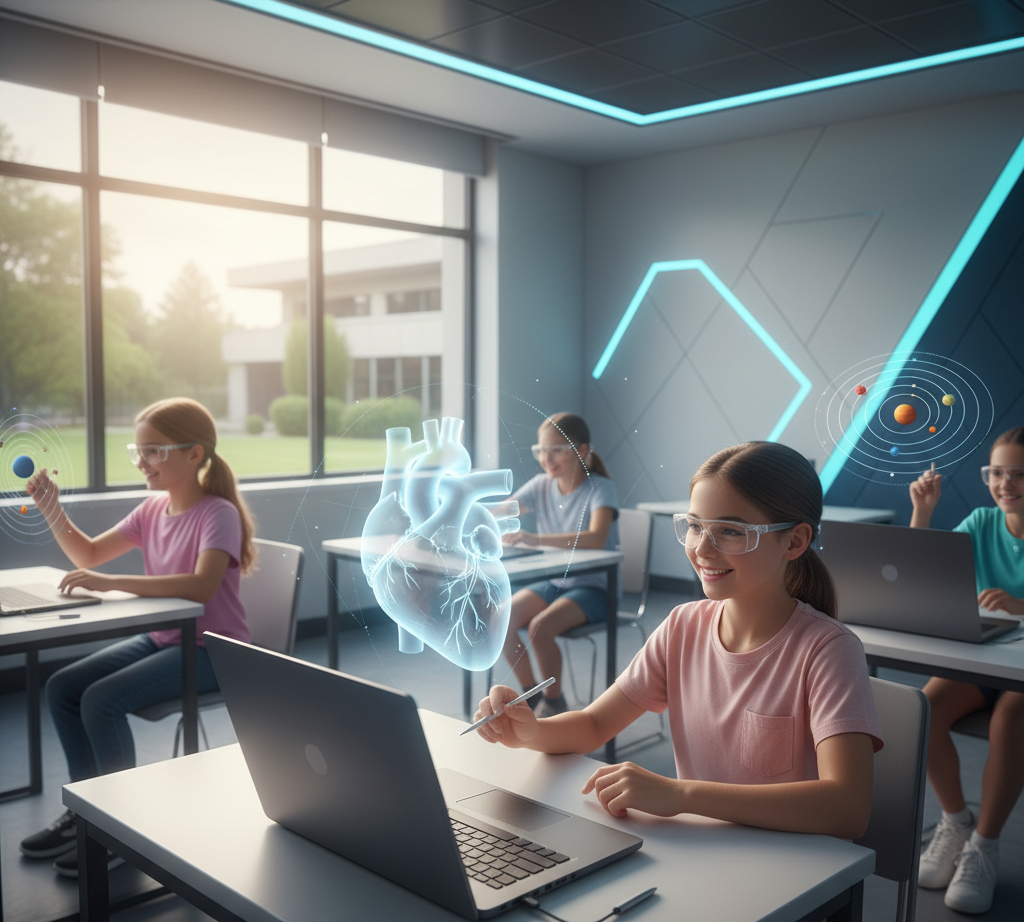
Imagine yourself roaming inside a living heart or exploring the Mars surface with a single click. This is not something from a fictional movie, but anyone can experience this today—all thanks to zSpace Inspire. Based on the Augmented and Virtual Reality (AR/VR) concept, these science gadgets have revolutionized the educational sector. Thus, are more efficient in comparison with traditional diagrams or flat books. An example is zSpace. It brings the content off-screen and into the hands of students quite literally. Want to explore further technical specifications and support? Visit the official zSpace Inspire page.
Isn’t learning becoming interesting in such a way?
For sure, it’s a game-changer. The reasons behind its magical effects are:It breaks the cognitive wall of abstract ideas in making the invisible visible. Students can no longer just read about a DNA helix or a complicated engine. It is time to pick one, twist it, and take it apart in 3D space. With AR/VR tools, you can analyze impossible experiments. For example, virtual dissections, complicated simulations of physics, or underwater explorations. Thus, helps you in risk analysis and management.
Unlike the traditional big VR headsets. They are based on simple internet access. zSpace Inspire laptop inserts these interactive, 3D holographic images directly in the field of view. This enables the students to be keenly conscious of their physical surroundings and work in a natural environment with each other and the teachers. A medical student can not only see the organ, but also present a three-dimensional model and move around a fully anatomized body.
Thus, zSpace Inspire transforms any classroom into a powerful and real-world laboratory and provides all students an equal opportunity to experience the science of the real world.
2. Foldscope Paper Microscope
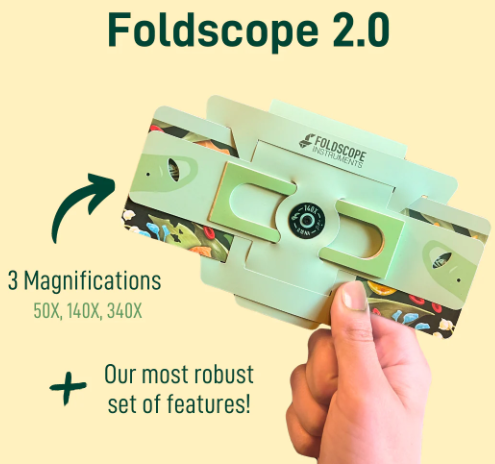
With the advent of this pocket size major laboratory tool, the implications of microscopy has revolutionized. Based on just paper and a tiny len, this magical instrument is highly feasible, durable and budget friendly. It has magification power range of 50X to 340X and can be easily fit to your smartphone. It enables you you to enhance the digital view.
From exploring tiny microbes to enjoy the details of higher species such as insects or plant structures. These durable yet waterproof paper microscopes are entirely potable to carry anywhere with you. You can pick the one as per your preferences from Foldscape Instruments,
Thus, it is perfectly just to call it genuine STEM equity worldwide that minimzes the barriers of heavy, fragile and expensive lab magnifying tools.
3. Coding Robots for Quick Programming
Are you tired of boring programming or coding lectures and want to try out you ideas practically but afraid of its complex coding behind. Here comes the solution,
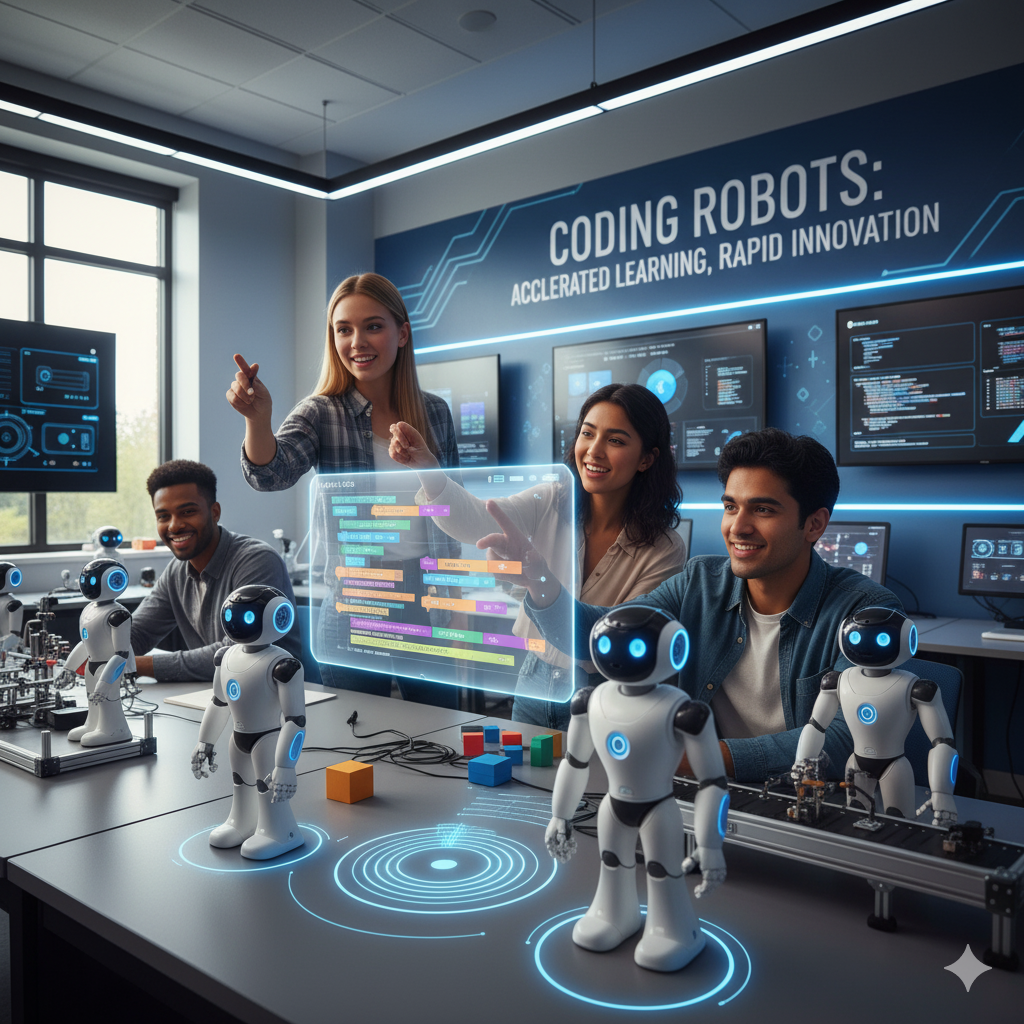
- Robot kits are specialized science gadgets tools, characterized by specialized programmable codes, smart motors and sensors such as accelerometers, gyroscope and color sensors. With these advanced features, students can transform their programming ideas into reality.
- With each code regardless of its origin from python or block based coding, one can experience abstract logics into visible movements.
- The impact of such robot kits on learning have been very effective because students are able to use a robot through a maze, measure light intensity or balance an object in real time.
- This is the ideal hands on adventure to engineering in which learning becomes an interactive activity. They can be of several types, including Sphero BOLT, LEGO Education SPIKE Prime.
So get ready, because with these robot kits, the future of learning to code just got a whole lot more exciting!
4. AR-based Molecular Manipulators
On a basic level, a physical chemistry pack that comes with an AR app which gives you step-by-step instructions, real-time alerts on any safety issues as well as 3D visualization of what happens to a specific molecule when something is added or removed to the system. you can expericenes Safe, Guided Chemical Exploration with it. The application can use digital information in order to display students the actual molecular model as it changes as the reaction occurs by overlaying the digital information with real chemical reactions. This enhances the safety of the labs dramatically and goes straight to the correlation between macroscopic (the fizzing of the liquid) and microscopic phenomena (the rearraining of the atoms).

So, plunge into the miniature world, in which the AR-based molecular manipulator transforms even intricate cybernetics into a play everyone can play and realize clearly: that even atoms are now ready to shine in the limelight!
5. 3D Design Software and Printers for Prototyping Powerhouse
Dismiss the idea of waiting weeks to have a prototype. With the availability of desktop 3D printers and simple design software such as Fusion 360 or Tinkercad, now your students can take an abstract concept, and, without needing to consult an online community, transform it into a physical object that can be tried during one lesson period!
These 3D printers has revolved digital fabrication, enabling students to design, slice and enjoy advanced printing. They just simply process complex engineering designing process.
They tend to proliferate genuine creativity and requisite problem-solving aptitudes as they swiftly check, fail, make repairs, and repeat the process of finding solutions many times.
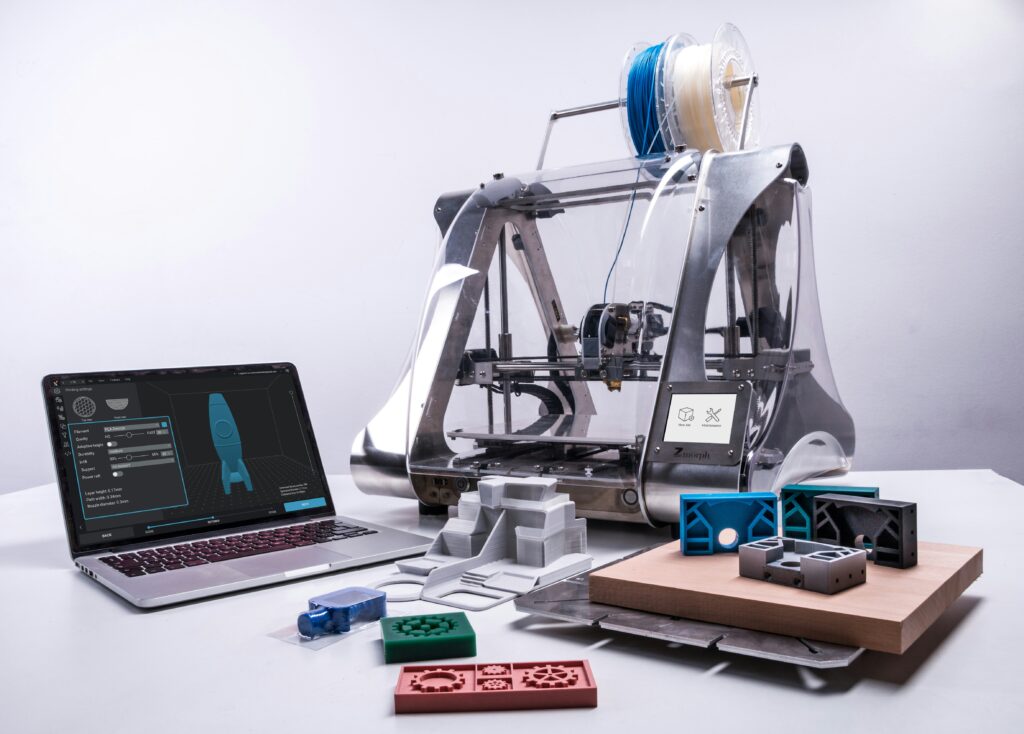
Ready to start? Use Onshape and many other popular collaborative cloud CADs, and need minute control with state-of-the-art printer management software such as PrusaSlicer.
Conclusion
These mind-shifting science devices are the source of the educational revolution, and they run on them. You may use them and learn with the new age of learning. When we go beyond the potential of observers and adopting tools that both comprehensively blend technology, code and solid space, we are not only providing students with a lesson, but with the ability and confidence to synthesize the complicated issues of 2025 and beyond.